My New Adventure Vehicle
Five years ago — at the start of the pandemic — I left behind my day job at a local camera shop to pursue photography as a full time career. It’s worth noting, however, that this wasn’t a spur of the moment decision. I had a plan to gradually transition from my day job to a career in photography, and I had been working at this plan since 2017. If not for the pandemic, I would have fully realized this goal in 2021, but I was able to accomplish it one year early.
Ever since my first photography trip in 2009, I’ve lived out of a SUV on these trips. Those early trips were in 2004 Toyota 4Runner Sport edition with a modest lift and off road tires. It carried all my gear, and comfortably got me to some remote trailheads through the years. I carried a tent on those trips, which was a bit of a hassle, but I hadn’t yet figured out how to arrange things to sleep in the back.
Ten years later, I sold the 2004 4Runner and purchased a 2014 4Runner with the Trail Premium trim. I upgraded the suspension with an Icon Stage two lift and BFGoodrich all terrain tires. It took a couple years, but I eventually found a way to organize things so that I could sleep in the back, then reconfigure it during the day. This system worked well, especially during inclement weather when setting up a tent would be a hassle.
The NExt Chapter
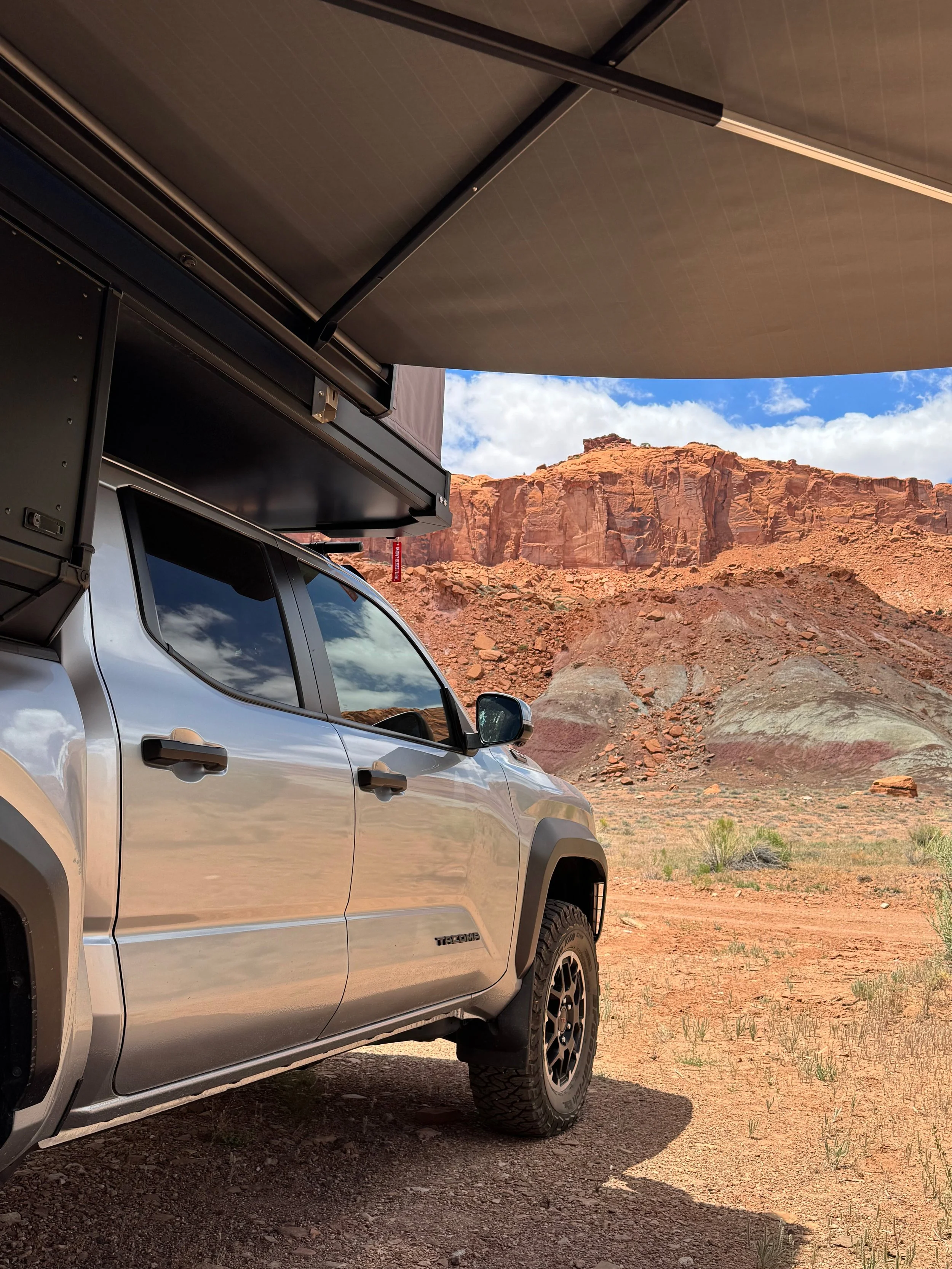
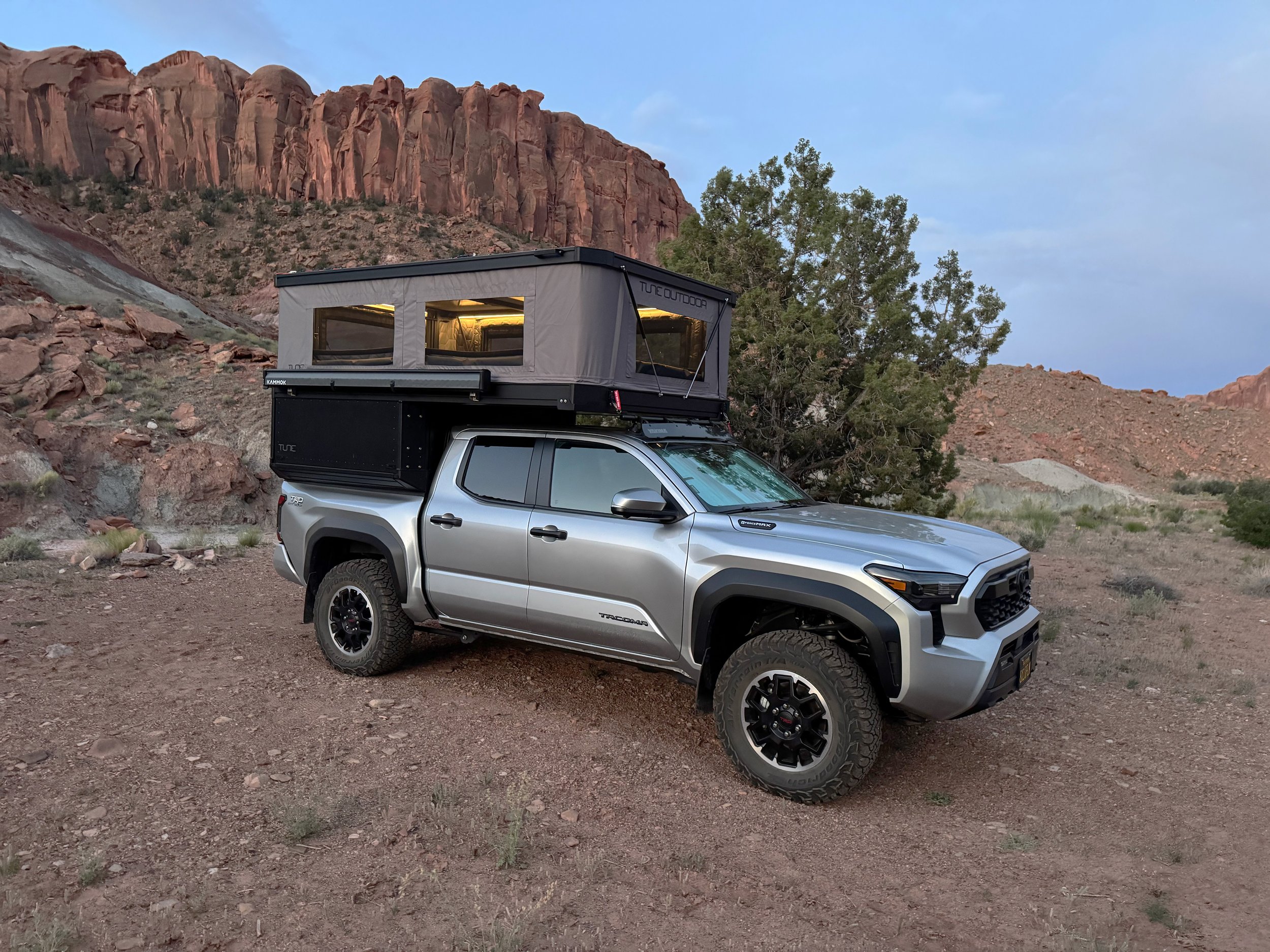
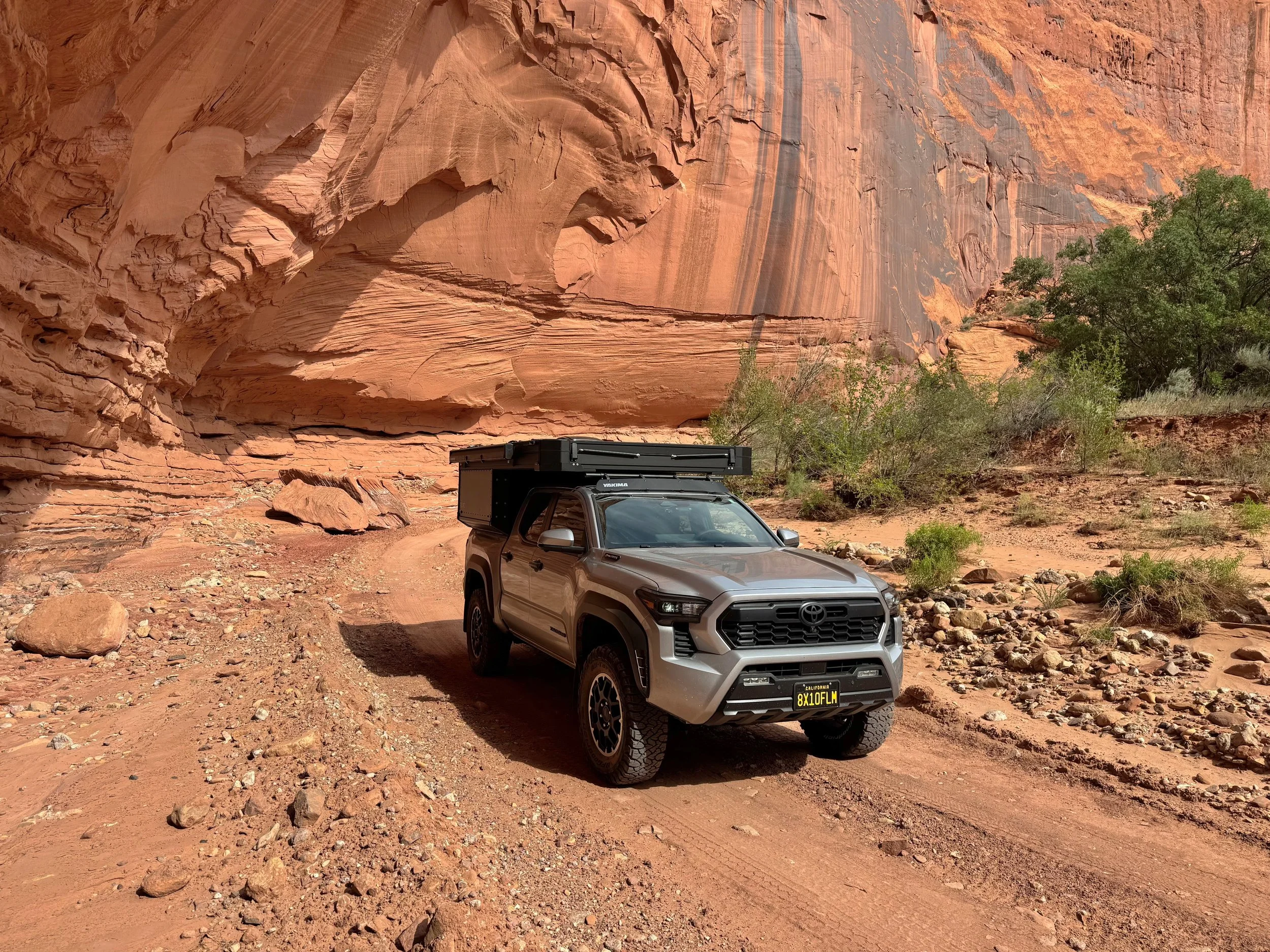
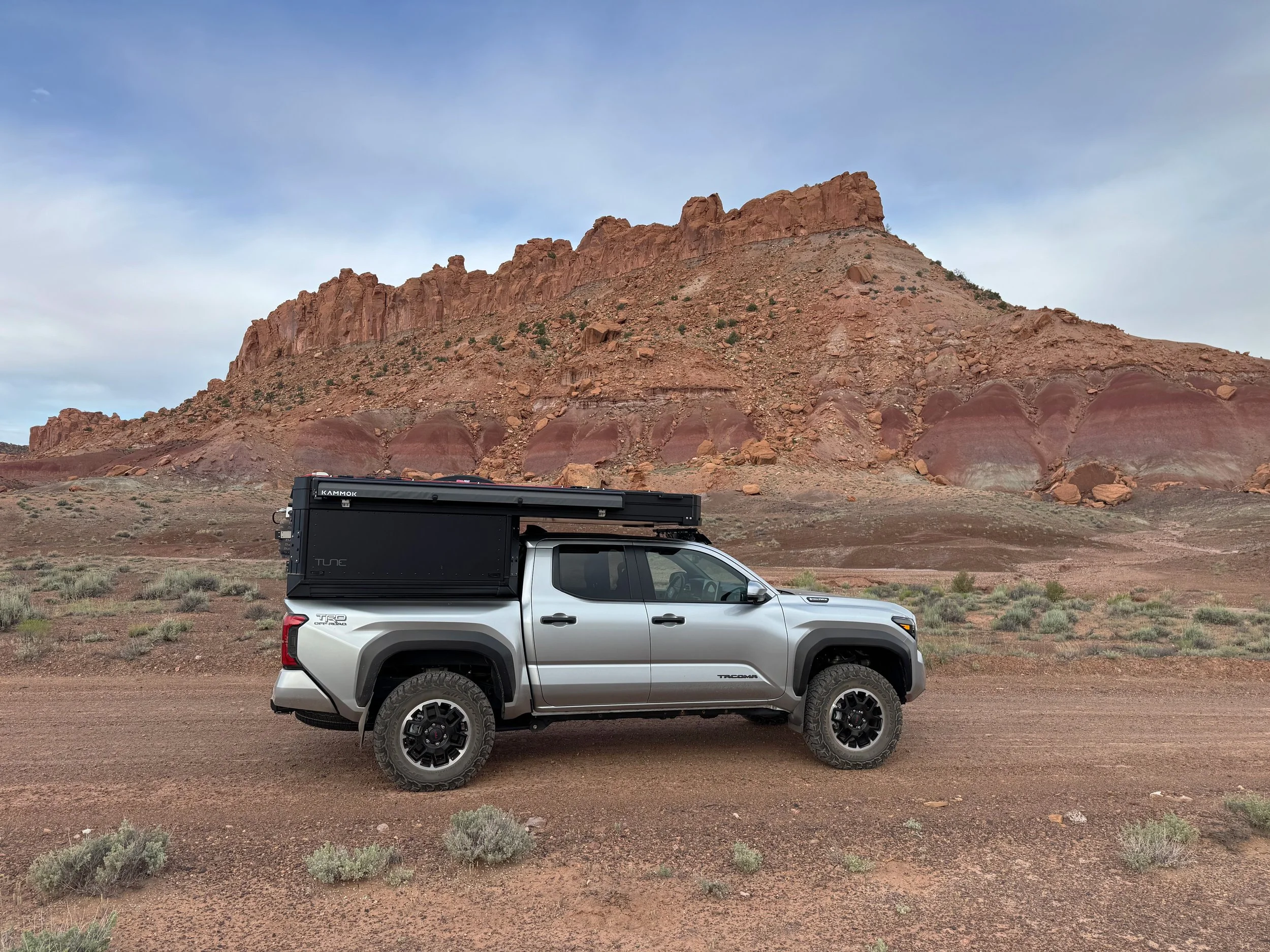
2025 Toyota Tacoma Hybird + Tune M1 Camper
Several years ago, I began pondering what my next vehicle should be. It needs to fit in my garage, which immediately rules out vans or full size trucks, and it needs to have the same general off road ability as my past 4Runners so I can access all of my favorite locations. In addition to all of that, I had two other requirements that my past 4Runners couldn’t provide:
A clean indoor space at the end of the day
A hot indoor shower
Those two requests seem simple enough, but if you start down the internet rabbit hole, there aren’t a lot of options.
In order to have the clean indoor space and hot shower, yet still fit in my garage at home, I would need a removable lightweight pop-up camper on a midsize truck, yet midsize trucks have limited payload capacity and the most of the campers on the market are far too heavy.
Tune M1 Camper
While researching various options online, I came upon the Tune M1, a lightweight pop-up camper. It weighs just over 400lbs, as compared to 1100lbs or so for slide-in campers. With a payload capacity of 1200lbs, the Toyota Tacoma can barely handle a slide-in campers by itself, let alone the added weight of passengers, food, camera gear, etc.
The Tune M1 was a fraction of the weight of a slide in camper, but it wasn’t until they announced a system of camper jacks that it officially checked all the boxes. The Project M from Four Wheel Campers came close, but didn’t have the furnace, solar, and I much preferred the larger windows and more modern design of the Tune.
In May of 2025, I purchased a Toyota Tacoma TRD off road premium hybrid. Unlike other hybrid vehicles, the fuel economy isn’t dramatically improved with the hybrid versus the non-hybrid. In this case, the stored electric power is used to give the engine an added boost when needed. Considering I would be carrying around the added weight of a camper, this was a good option. It also has the added benefit of a 2400 watt inverter that can be used while driving to charge power stations on cloudy days when solar isn’t as effective.
The Tune M1 is a canopy camper, which means it sits on top of the the truck bed, which is one of the reasons why it’s so lightweight. I ordered it with the following options:
440 watts rooftop solar
Truma Furnace
Insulation Pack
Hest Mattress w/ bed extension
Glass front window against the truck cab
Glass Barn Doors on the rear
Camper Jacks
Kammock Awning
I ordered my Tune M1 in May when I purchased the Tacoma. The camper was completed in August, then shipped from Colorado to California where it was installed by Antelope Valley Overland in Lancaster.
For More inforation about the Tune M1: https://www.tuneoutdoor.com
The Driving Experience
It’s worth mentioning that my 2025 Tacoma has a digital rear view mirror. The camera is near the high mounted stop light on the back of the cab, and that camera can see through the camper (thanks to the glass on front and back), and give me a fantastic view while driving. It compensates for the heavily tinted rear window of the camper. With the standard rear view mirror, it looks as dark as night, but the camera adjust the exposure.
My view in traffic while driving with the Tune M1. The line down the middle is the rear barn doors, and the dark object on the left is part of my Vecel interior (more on that later), neither of which block anything important while driving.
Even with the added weight and reduced aerodynamics of the camper, the Tacoma still drives very much like my past 4Runners. Thanks to the digital rear view mirror, I’m able to monitor traffic and don’t have any issues parking or backing up. The 360 degree overhead camera system on the Tacoma is also wonderful for this. With the camper installed, I get around 16MPG, but this also takes into consideration a lifted suspension and heavy E rated tires.
Although the fuel economy of the Tacoma + camper is similar to my previous 4Runner, the Tacoma has a smaller gas tank, so it has less range between fill ups. It’s not a big deal overall, but I do find myself stopping at one more gas station on my way home from Zion.
On my first several trips, I’ve encountered some relatively strong side winds, but it wasn’t much different than driving my previous 4Runner with a Thule cargo box on the roof. If anything, the longer wheel base and heavier load may have helped me a bit.
Suspension And Tires
Although the additional weight of the Tune M1 is about the same as two passengers in the back of the truck, I knew from past experience that the stock suspensions tend to sag a bit with even a bit of weight. This was the case for my 2014 4Runner, and it was one of the reasons I replaced the stock suspension with one from Icon. But with the Tacoma, I would need to strike a balance between my photo trips while the camper attached, and daily driving at home without the camper. I opted for the Old Man Emu BP51 suspension with the 440lbs rear coils. This provided me 2 inches of lift in both front and rear. With the camper attached, the rear settles just over an inch for a visually leveled setup.
One of the great things about the OME BP51 suspension is the ability to adjust the compression and rebound. When the camper is installed, I can crawl under the truck and tighten the collars on the shocks for a stiffer ride, and when the camper is removed, I can soften the ride. With this adjustment, the truck drives very similar to stock both with and without the camper.
For tires, I went with E rated BFGoodrich AT KO3 at 275/70/R18, which is just one size larger than stock and just over 33”. Sure, you can fit 35” tires on a lifted tacoma, but that cuts into fuel economy, and perhaps more importantly, a spare tire of that size won’t fit under the truck. I haven’t updated my spare yet, but based on my reading, a 275/70/R18 spare will still fit under the truck.
I went with the heavy duty E rated tires because of the added weight of the camper, and their greater resilience off road. I had the same tires on my previous 4Runner, and never had a flat. With the camper removed, I get ~23MPG highway, even with the lifted suspension and heavy tires.
Front suspension components with OME BP51 and UCA. I like how the ball joint of the UCA is sealed from dirt, water and road grime. The height of the front shocks are adjustable, and were set for 2” of lift.
Rear suspension components with OME BP51 showing the rear reservoir. In only a few minutes, I can crawl under the truck and use a spanner wrench to turn a collar on the front and rear socks for a softer of stiffer ride. I find that having the rear at 9/10 works great with the camper, and 5/10 when the camper is removed. Lower numbers provide a softer ride.
Completely Stock
Lifted 2” with OME BP51 and BFGoodrich AT KO3 @ 275/70/R18
Additional Support
For the greater part of the year, the suspension and tires listed above have been fantastic. As expected, the rear drops roughly 2” with the camper and interior installed, allowing the rear to sit level with the front. That being said, over the past year or so, I’ve wanted a bit more support for the rear to maintain adequate clearance.
Switching to heavier duty rear coils wasn’t a great option because it would compromise the ride quality when the truck isn’t loaded. Instead, I contacted the folks at Timbren who make a product that replaces the rear bump stops with something more substantial. When unloaded, the truck drives like normal but when the camper is loaded, the springy rubber bumpers make contact with the rear axle, helping carry the additional load.
When speaking with the folks at Timbren, I told them I had a lifted Tacoma with a part-time camper and wanted a bit more support for the rear. They suggested buying spacer kit SPCRTORTNDR to work with the TORTTNDR kit. The goal was roughly a 1” gap between the Timbrens and the rear axle, which is exactly what I ended up with by using a 1” spacer from the spacer kit. The Timbrens were easy to install, and after loading my camper for my upcoming trip, the rear only dropped 1”. I’m sure it will settle a bit more as I continue to drive, but it looks like that 1” gap was a good target. These photos show the truck both unloaded and loaded. Note the gap between them and the rear axle.
As of writing this, I haven’t yet gone on a long road trip with the Timbrens installed (that will happen in the next couple of weeks), but from what I understand, the added support is also suppose to improve the already excellent ride quality. I’ll update this page after I return from my trip.
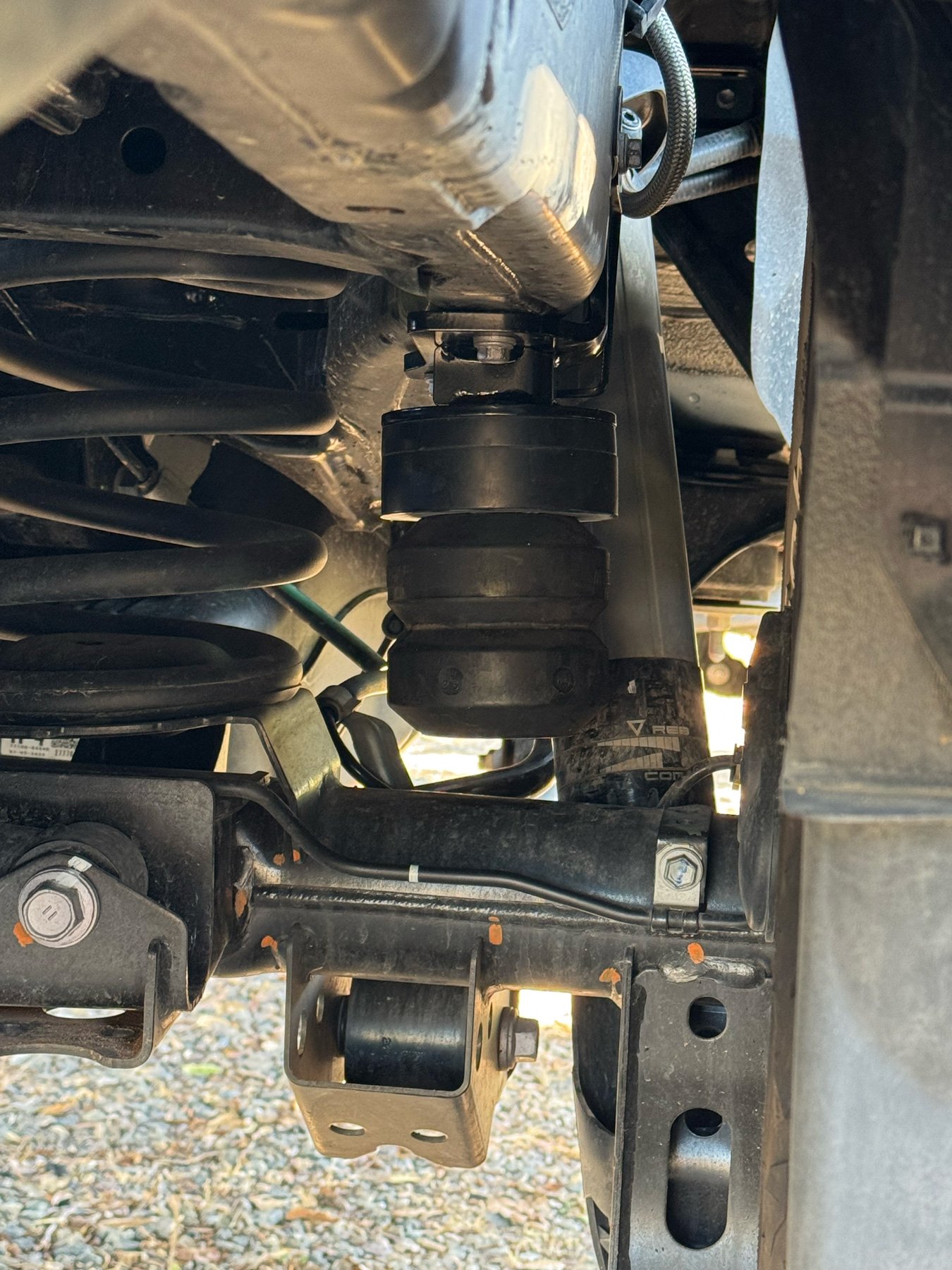
Timbrens installed on my unloaded Tacoma. Note the 1” gap between the axel and the rubber spring.
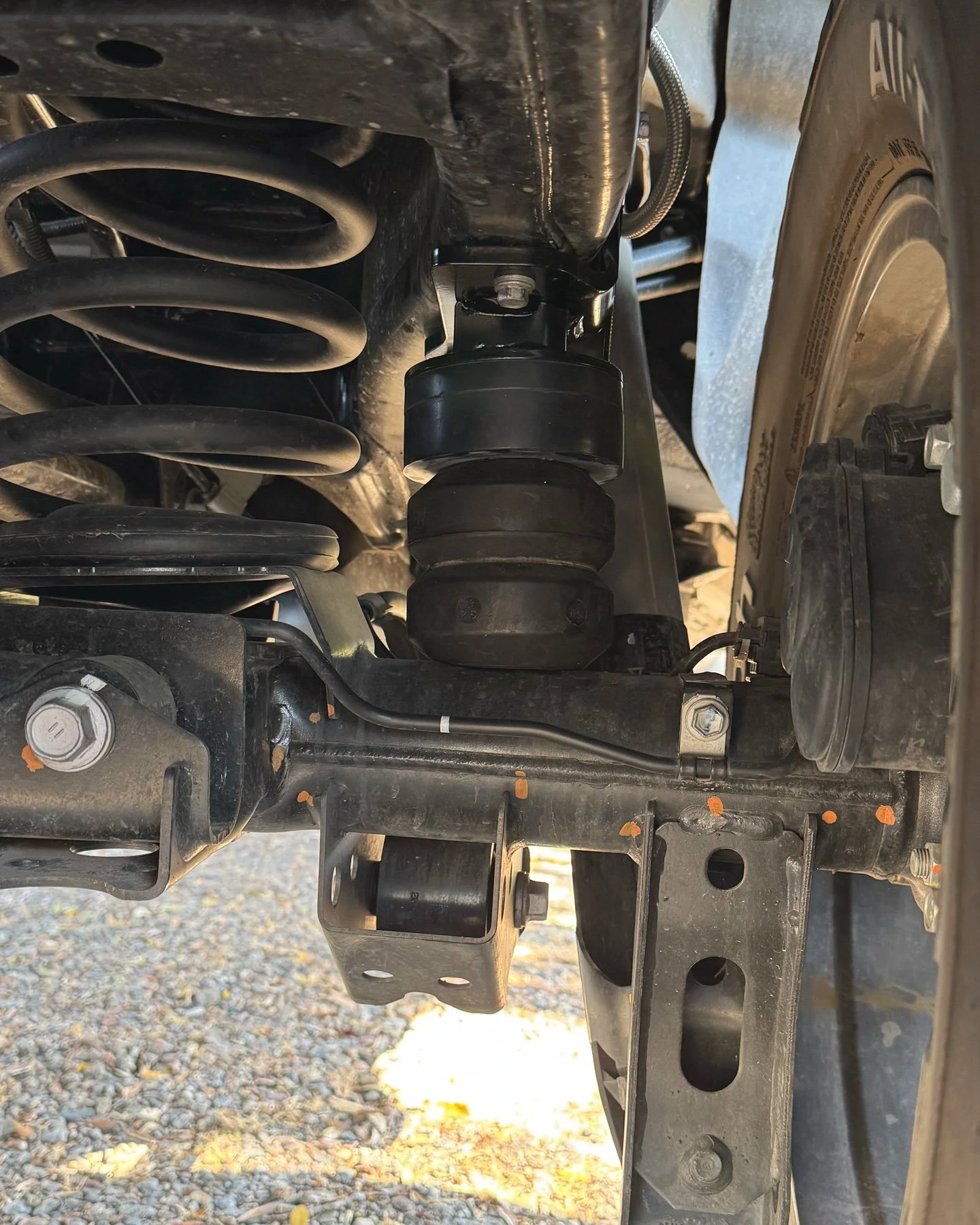
With both the camera and the interior installed, the rear has dropped 1” and the Timbrens now rest on the rear axle.
All About the Interior
The rug in this photo is a 2’x3’ jute doormat from Amazon. Although there isn’t a lot of floor space, the inside feels absolutely cavernous thanks to the wide walls of the Tune M1, the high ceiling, and the efficient use of space with the Vecel interior.
With the Tune M1, you have a comfortable bed, 6 big windows, solar power, and a cavernous indoor space to organize however you like. Sure, you could go the utilitarian route and store your gear in some plastic tubs, but I wanted something a bit more comfy.
Vecel Interior
There’s an awesome company east of Los Angeles called Vecel Outdoors that creates custom interiors for the Tune M1 and many other campers. The interior is designed for your specific truck and your specific camper. In my case, they had a wonderful design for the 2025 Tacoma with a Tune M1 that provides a kitchen counter with a sink, Dometic faucet, 3 gallon water tank, 3 gallon gray water tank, and plentiful storage on one side of the camper, and a bench with storage on the other side. On the bench side, there’s is a cubby toward the rear that fits my Bluetti Elite 200 V2 power station, an ideal battery size for this camper. The 440watts of solar easily tops off the battery on sunny days, and on cloudy says, I can hit a button on the dash while driving to charge the power station from the 2400 watt outlet while driving.
Thanks to the overhanging wings of the Tune M1, the interior is incredibly spacious, and there’s enough space between the bench and kitchen counter for a Dometic CFX5 55L fridge. You can step on the fridge or the bench to get up to the bed, and I’ve found that the Tune M1’s additional Hest Foam mattress from the bed extension is a perfect match for the bench. When paired with a pillow, it makes a cozy spot for reading at the end of the day, as seen in these photos. Oh, and it also happens to be next to the Truma furnace, which is cozy on cold nights.
The kitchen countertop and bench top are made of bamboo which is both beautiful and functional, and the cabinets are extremely high grade plywood with a protective vinyl layer that were custom cut to perfection with a CNC machine. The Interior weighs just over 200lbs, and when combined with the weight of the Tune M1, the overall weight is roughly half of a slide-in camper. It’s also worth mentioning that the weight of the interior helps to lower the center of gravity of the camper. It drives better with the interior installed than without it.
Although you can install the interior yourself, I chose to have the folks at Vecel do the initial install since it involves attaching some rivnuts to the truck bed and making sure everything is perfectly aligned. After the initial instal, it’s easy to remove or reinstall the components.
For more information about the interior, be sure to check out their website: https://www.veceloutdoors.com/
The bench makes a great place to relax and unwind at the end of the day. This also shows the sort of views you can get out the big windows.
Even with the pop-top lowered, it’s still a great place to relax and have lunch at midday. The lower bench can be used as a kitchen countertop while making lunch.
Designed to be Removed Between Trips
The Vecel floor with the cabinets removed. If you look carefully, you can see the rivnuts where the bolts secure the interior. This photo was taken after removing the camper for the first time, but before I purchased a tonneau cover.
Removing the Interior
As mentioned earlier, an important consideration for all of this was for me to park in my garage between trips. The problem is, I only have a 7 foot garage, and with the camper installed, It’s over 8 feet tall. This of course means that I will need to remove the camper between trips, which isn’t as straightforward as a slide-in camper, though I can remove it or reinstall it in only a few hours.
The Vecel interior is comprised of 4 units, each of which secures to a plywood floor with 4 bolts, and there are 6 additional bolts that secure each cabinet to the adjoining cabinet as a pair. It takes me roughly a half hour to remove all 4 units, which I cover in moving blanks and store in my garage.
The heavy duty plywood floor is attached to the bed of the truck with 4 bolts, and remains in place between trips. To protect it from the elements, I install a hard roll-up tonneau cover between trips. It’s quick to install, and does a fantastic job keeping the bed dry.
When the camper was installed, a custom metal lip was installed on the leading edge of the truck bed. I leave this in place even with the tonneau cover, and use a strip of window weather sealing under the front edge of the tonneau cover.
Sure, I won’t be hauling a load of dirt or mulch in the back of the truck, but I really wasn’t planning on doing that anyway. For day to day use, the combination of the Vecel floor with the Tonneau cover makes for an extremely clean setup. Also it’s much nicer walking on the solid floor than the corrugated composite truck bed when placing luggage, or other large items in the back.
Removing and Storing The Tune M1
After removing the interior, I attach the camper jacks, ensure they’re making contact with the ground, then loosen and remove the 6 bolts that clamp to the camper to the truck bed. After jacking it up a few inches to fully clear the truck bed, I can drive out from under it, then slowly lower it onto a platform made of 4x Ridgid sawhorses (rated for 2400lbs each), 4x 2x6, and two pieces of half inch plywood. I then remove the jacks and cover it with a RV cover to protect against UV light. The cover is quite large, but using some spring clamps and a ratchet strap, it’s a reasonable fit.
It takes roughly 20 minutes to lower the camper to its platform height. I manually turn each jack 5 times then move on to the next one. With two people it would be faster, but honestly 20 minutes isn’t bad.
Once lowered onto the platform, I use strip of tape to cover the plywood seam, and a strip of foam window weather sealing (not pictured) along the back edge to keep spiders out. Before lowering the camper onto the platform, I lay down a tarp to keep the spiders out.
Reinstalling the Camper
The use of the industrial dollies proved highly effective. It was easy to roll the camper into place, and then fine tune the alignment while in the back of the truck nudging it into place.
Before removing the camper for the first time, I measured the distance between the bed of the truck and the front of the camper, and that’s why I decided to go with half inch plywood for the spacer. This setup worked extremely well.
Working Smarter, not Harder
This is the part I was concerned about. The Tune M1 needs to be precision aligned with only a quarter inch or so of leeway in any direction. If not aligned properly on top of the truck bed, the bolts will not line up, but how can one achieve that level of precision? It’s not as easy as simply backing up the truck until it’s aligned and lowering it. If you back up a half inch too far, the camper will make contact with the back of the truck’s cab, and getting side to side alignment would be just as difficult.
While thinking about this, I figured there must be a way to move the camper onto the truck rather than the other way around. I started looking around, and found some heavy duty industrial dollies, each of which is rated for over 600lbs. My method is to put a dolly under each leg, then strap the legs together with a pair of 2x4s (concave cuts on the end) and ratchet straps for added stability so the legs can’t move independently while rolling the camper into position.
To create a hard stop while moving the camper into position, I used two pieces of slotted angle steel and a piece of half inch plywood to create a stopper guide that hangs below the inside front edge of the camper. This guide is attached to the T slot on the inside and can be quickly installed.
We have a flat, smooth and level RV pad at our house, which is important. With the help of my wife, we smoothly roll the camper into place until the plywood piece is snugged up against the front of the truck bed, then I get inside the truck and gently position it side to side so everything is aligned. I then lower it into position and bolt it in place. The entire process is incredibly smooth, and I highly recommend it.
It should be noted that removing the camper is easy enough with just one person, but reinstalling it is certainly a two person job.
Helpful Modifications
Remove Before Flight Tags
After lowering the roof on the Tune M1, 4 latches must be secured before driving. If one were to be distracted by anything during this process (Squirrel!), it’s easy enough to simply drive off with these latches unsecured. To guard against this, I purchased some bright red “Remove Before Flight” keychains on Amazon, and attached them to S Biner clips. I attach one to each latch while setting up the camper. They are extremely visible, and even jingle in the wind a bit. It would be nearly impossible to miss the one hanging directly above the driver door. After collecting each of these clips in the morning and securing the latches, I attach all 4 to a carabiner hanging on the passenger seat. If at any point while driving I question if I secured those latches (Did I leave the garage door open?), I can just reach over and feel them.
Wind Fairing
To help a bit with aerodynamics, I wanted a wind fairing, but most of the options I’ve seen involve installing a roof rack which adds considerable weight, and I personally don’t like the look of roof racks on trucks. I wanted something I can quickly and easily install while the camper is attached, then remove between trips. To accomplish this, I purchased a Sea Sucker monkey bars roof rack which uses vacuum pumps to attach to the roof of the truck. Only half that roof rack was required. I used the rear single cups and a cross bar along with a Yakima windscreen. The remaining vaccum cups aren’t wasted though. You can use them on the ceiling of the camper for a variety of things. I use one to hold my shower head for my indoor shower kit.
Where the 4 contact points of the wind fairing touch the roof along the leading edge, use some extremely strong rubber-encased magnets I found on Amazon. They protect the paint from being chaffed.
Latch Bumpers
If you opt for the rear barn doors, I learned early on that the rear latches (look for the red tag in the above image), can drop down and wedge against an open barn door. The moment you try and close the door, it will place a lot of force on the latch and bend it. To avoid this, I bought some rubber caps designed to go on the legs of chairs, drilled a hole, then used a M8 bolt, some rubber washers and one of the T nuts included in the accessory pack to attach them directly below the latches. Now the latches rest on these rubber bumpers and don’t touch the barn doors. In the photo to the right, you can still see how the latch is bent. It’s only subtle now, but I carefully straightened it as much as I could.
Internal Starlink Mount
The Tune M1 has a white plastic roof, which is ideal for internally mounting my Starlink Mini. I use a Seasucker Starlink Mini mount, which suctions to the underside of the roof. Unlike regular suction cups where you never quite know how well they’re attached, Seasuckers have vacuum pumps that reveal a bit of orange if they’re losing strength. A few quick pumps will increase the grip strength. I positioned the mount so that the pumps are easily seen and accessed.
Prior to using this setup, I had purchased an inexpensive suction cup mount on Amazon, but that unit failed on the first day of my Fall trip to Zion. The Seasucker mount is incredibly sturdy, and I trust it off road.
I routed the Starlink power cable alongside the power cable for the fan and lights. It emerges near the furnace, and then tucks behind my fridge and the Vecel bench to my Bluetti battery that’s stored in the cabinet in the rear passenger side of the camper.
A Hot Indoor Shower
This one takes a bit more creativity, but I’ve found a system that works well. For the enclosure, I use the lightweight shower system made by The Wanderful. It’s comprised of a lightweight rectangular shower curtain with stiffeners along the top and bottom edges to hold its shape, and a foldable basin to capture the water. There’s no drain, but it only takes a couple gallons of water to shower, and the basin can be siphoned when you’re done. I attach the shower curtain via the Tune gear anchors that were included in the accessory pack. The enclosure is certainly small, but it gets the job done and realistically it can’t be all that much larger.
For the heated water, I fill the sink with 2 or 3 gallons of water, then drop a 1000 watt immersion heater into it. It takes about 10 minutes or so, and the water comes up to an ideal temperature. With the water preheated, I place a Flextail shower into the sink. The shower head has the ability to turn the flow on or off. I find it’s best to just reduce it to a trickle rather than shutting it off completely so the pump doesn’t get overworked.
Any leftover water can be drained down the sink to the Dometic 3 Gallon gray tank. Depending on the regulations of where you are camped, you can either empty the basin outside, or use the Flextail to pump the used shower water back into the sink and then empty the gray tank where allowed.
This photo shows a Rinsekit that I was experimenting with before going with the Flextail shower kit. Utilizing the sink to heat the water allowed me to use a more compact and lighter weight shower kit.